
Short Term Health Insurance Plans: A Practical Guide
Finding health insurance that fits your life can be confusing, especially if you need coverage for just a short period. Maybe you’re between jobs, waiting for new employee benefits, or missed open enrollment. In these times, short term health insurance plans can fill the gap. But how do these plans really work, and are they the right choice for you? This guide explains everything you need to know in simple, clear language—so you can make smart decisions for your health and wallet.
What Is Short Term Health Insurance?
Short term health insurance is a type of temporary medical coverage. It usually lasts from one month up to a year, sometimes with options to renew for a limited period. Unlike regular health insurance, short term plans are designed to cover sudden illnesses or accidents—not routine care or pre-existing conditions.
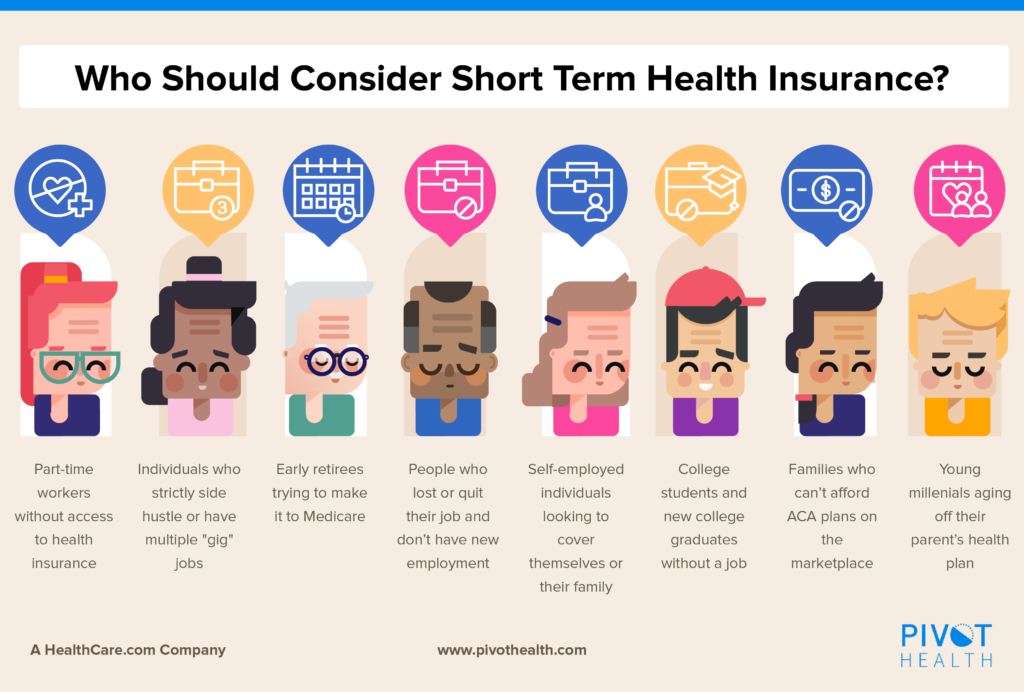
These plans are popular for people in transition, such as:
- Recent college graduates
- People between jobs
- Early retirees not yet on Medicare
- Workers waiting for other insurance to begin
The main goal is to protect you from high medical costs during uncovered periods. But since these plans are not as complete as major medical insurance, understanding the limitations is important.
How Do Short Term Health Insurance Plans Work?
Short term health insurance works much like regular insurance, but with some key differences:
- Application: You can apply anytime during the year, with no open enrollment period. Approval is usually quick—often within 24 hours.
- Coverage Period: Policies can last from 30 days up to 364 days, and sometimes longer if your state allows renewals.
- Premiums: Monthly payments are generally lower than full health insurance, but your out-of-pocket costs can be higher.
- Medical Underwriting: Insurers may ask about your health and can deny coverage based on your medical history.
It’s important to note that these plans do not follow all rules of the Affordable Care Act (ACA), so benefits and protections are not the same.
What Does Short Term Health Insurance Cover?
Coverage varies widely by plan and state, but most short term health insurance plans include:
- Emergency room visits
- Hospitalization
- Doctor visits for illness or injury
- Some surgery costs
- Lab and diagnostic tests
- Prescription drugs (sometimes, but not always)
What’s usually NOT covered:
- Pre-existing conditions
- Maternity care
- Mental health services
- Preventive care (like vaccines and check-ups)
- Prescription drugs (often very limited)
Always read the policy details. Many people miss that common needs—like ongoing prescriptions or prenatal care—aren’t included.
Who Should Consider Short Term Health Insurance?
Short term health insurance isn’t for everyone. It fits best for:
- People in between jobs who are waiting for employer health insurance to start
- Recent graduates who lost coverage under a parent’s plan
- Early retirees not yet age 65 for Medicare
- New employees during probation periods before benefits begin
- People who missed open enrollment for ACA plans
If you have ongoing health issues or need regular care, a short term plan will likely not be enough.
Pros And Cons Of Short Term Health Insurance
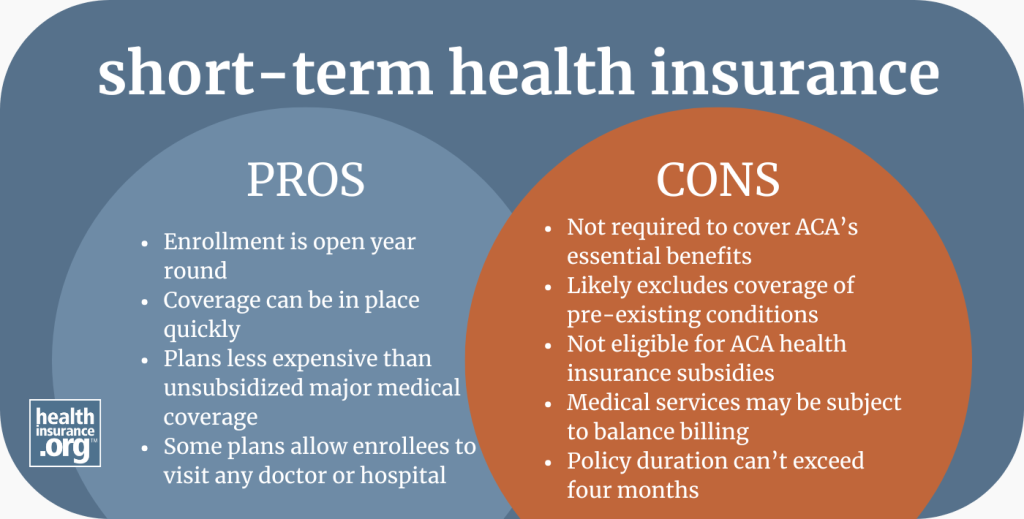
Advantages
- Quick approval: Most applicants get a decision in one day.
- Lower premiums: Monthly costs are often much less than ACA plans.
- Flexible timing: Start any time of year, end when you want.
- Good for emergencies: Covers big, sudden medical bills.
Disadvantages
- Limited coverage: Many services are excluded.
- No pre-existing coverage: Illnesses you already have aren’t covered.
- Can be denied: Insurers can say no based on your health.
- Not ACA-compliant: You may miss key protections and benefits.
Non-obvious insight: Many people think “any insurance is better than none,” but with short term plans, it’s easy to get caught by coverage gaps. For example, if you develop an illness during your coverage and then renew, some insurers count it as a “new pre-existing condition” and refuse to cover it on renewal.
How Short Term Plans Compare To Other Insurance Options
It’s smart to compare short term health insurance to other choices. Here’s a side-by-side look:
| Feature | Short Term Plan | ACA Plan | COBRA |
|---|---|---|---|
| Coverage Length | 1-12 months | Year-round | Up to 18 months |
| Pre-existing Conditions | Not covered | Covered | Covered |
| Premiums | Low | Medium to high | High |
| Enrollment Time | Anytime | Open Enrollment/Special | Within 60 days of job loss |
| Coverage Scope | Emergency/Basic | Comprehensive | Comprehensive |
A common mistake is to pick the cheapest plan without checking what’s actually covered. Always read the exclusions and compare them to your health needs.
Costs Involved In Short Term Health Insurance
Short term health insurance is often chosen for its low monthly price. But it’s important to understand all costs:
- Premium: What you pay every month.
- Deductible: The amount you must pay before insurance pays.
- Coinsurance: The percent you pay after deductible (e.g., 20% of a bill).
- Copay: Set fee for certain visits, if offered.
Typical numbers:
- Premiums: $50–$300/month (varies by state, age, plan)
- Deductibles: $1,000–$10,000 per policy period
Here’s a sample cost breakdown:
| Type | Low | High |
|---|---|---|
| Monthly Premium | $50 | $300 |
| Annual Deductible | $1,000 | $10,000 |
| Coinsurance | 20% | 50% |
Non-obvious insight: Plans with very low premiums often have very high deductibles. This means you pay more out of pocket before the insurer helps. Some people choose a low-premium plan but then struggle to pay a sudden $7,500 bill before insurance starts.
How To Choose The Right Short Term Health Insurance Plan
Making the right choice involves more than just picking the lowest price. Here are key steps:
- List your needs: Do you need coverage for just accidents, or for doctor visits too?
- Compare exclusions: Each plan lists what is NOT covered. Check for common exclusions like prescriptions or mental health.
- Check the provider network: Some plans let you use any doctor; others limit you to a network.
- Understand renewal rules: Can you renew if you need coverage longer?
- Review maximum payouts: Some plans cap what they pay per incident or year.
- Read reviews: Learn from other customers’ experiences.
Practical example: Say you’re between jobs for three months. You’re healthy, just want to avoid huge bills from an accident, and don’t need routine care. A basic short term plan with a higher deductible might work. But if you take regular medicine or need check-ups, look for a plan that includes some prescription coverage.

State Regulations And Limitations
Not all states allow the same short term health insurance rules. Some states limit plan length to just 3 or 6 months, while others allow up to 36 months with renewals. A few states, like California and New York, do not allow short term health plans at all.
Before buying, check your state rules:
| State | Allowed? | Max Duration |
|---|---|---|
| California | No | N/A |
| Texas | Yes | Up to 36 months |
| New York | No | N/A |
| Florida | Yes | Up to 36 months |
| Illinois | Yes | Up to 6 months |
Note: State rules can change, so always check with your state insurance department or a trusted broker for the latest rules.
Common Mistakes To Avoid
- Ignoring pre-existing condition rules: Many assume short term plans cover all illnesses. They usually don’t.
- Not reading exclusions: Details matter. Even common services, like prescription drugs, can be missing.
- Underestimating out-of-pocket costs: Low premiums can mean high deductibles and coinsurance.
- Choosing the longest duration without review: If your health changes, renewed coverage may not cover new issues.
- Not checking provider networks: You may need to use specific doctors or hospitals.
When Short Term Health Insurance Makes Sense
Short term plans work well when you:
- Need coverage for 1–12 months only
- Are healthy with no ongoing medical needs
- Want low monthly payments
- Understand and accept the limits
- Plan to get full insurance soon
They’re not a good choice if you expect to need regular care, expensive prescriptions, or have any pre-existing conditions.
Alternatives To Short Term Health Insurance
If you’re not sure about a short term plan, consider:
- ACA marketplace plans: Especially if you qualify for subsidies.
- COBRA: Temporary continuation of employer insurance, but often expensive.
- Medicaid: For those with low income (check eligibility).
- Direct primary care: Monthly fee for basic doctor visits (does not cover emergencies).
- Health care sharing ministries: Faith-based cost-sharing groups (not insurance).
Each option has pros and cons, so compare them before deciding.
For more on insurance rules, you can visit the Healthcare.gov official site.
Frequently Asked Questions
What Is The Maximum Length For A Short Term Health Insurance Plan?
Most plans last from 1 month up to 12 months, but some states allow renewals up to 36 months. State law decides the final limit.
Does Short Term Health Insurance Cover Prescription Drugs?
Coverage for prescription drugs is often limited or not included at all. Always check the policy details. Some plans offer optional prescription coverage for an added cost.
Can I Use Short Term Health Insurance As My Main Insurance?
Short term health insurance is not meant for long-term use. It works best as a temporary solution until you get full coverage.
Will I Be Covered For Pre-existing Conditions?
No, short term health insurance usually does not cover pre-existing conditions. If you need treatment for a condition you already have, these plans are not a good fit.
How Fast Does Coverage Start After I Apply?
Approval and coverage can start in as little as 24 hours, sometimes even the next day after you apply and pay your first premium.
Choosing the right health insurance is a big decision, especially when life changes quickly. Short term health insurance plans can offer peace of mind for emergencies and unexpected events, but it’s important to understand what you’re buying. Take time to compare your options, read the fine print, and think about your health needs.
With the right information, you can make the best choice for your situation—without any surprises.
Read More:
- Private Medical Insurance UK: Top Benefits and How to Choose
- Compare Family Health Insurance Plans: Find the Best Coverage
- Affordable Health Insurance Quotes: Save Big on Coverage Today
- Best Private Health Insurance Plans: Top Choices for 2024
- Medicare Dental And Vision Coverage: What You Need to Know
- Medicare Supplement Plans Comparison: Find the Best Coverage
- Medicare Prescription Drug Plans: Save Big on Your Medications
- Best Medicare Advantage Plans: Top Picks for 2024 Coverage